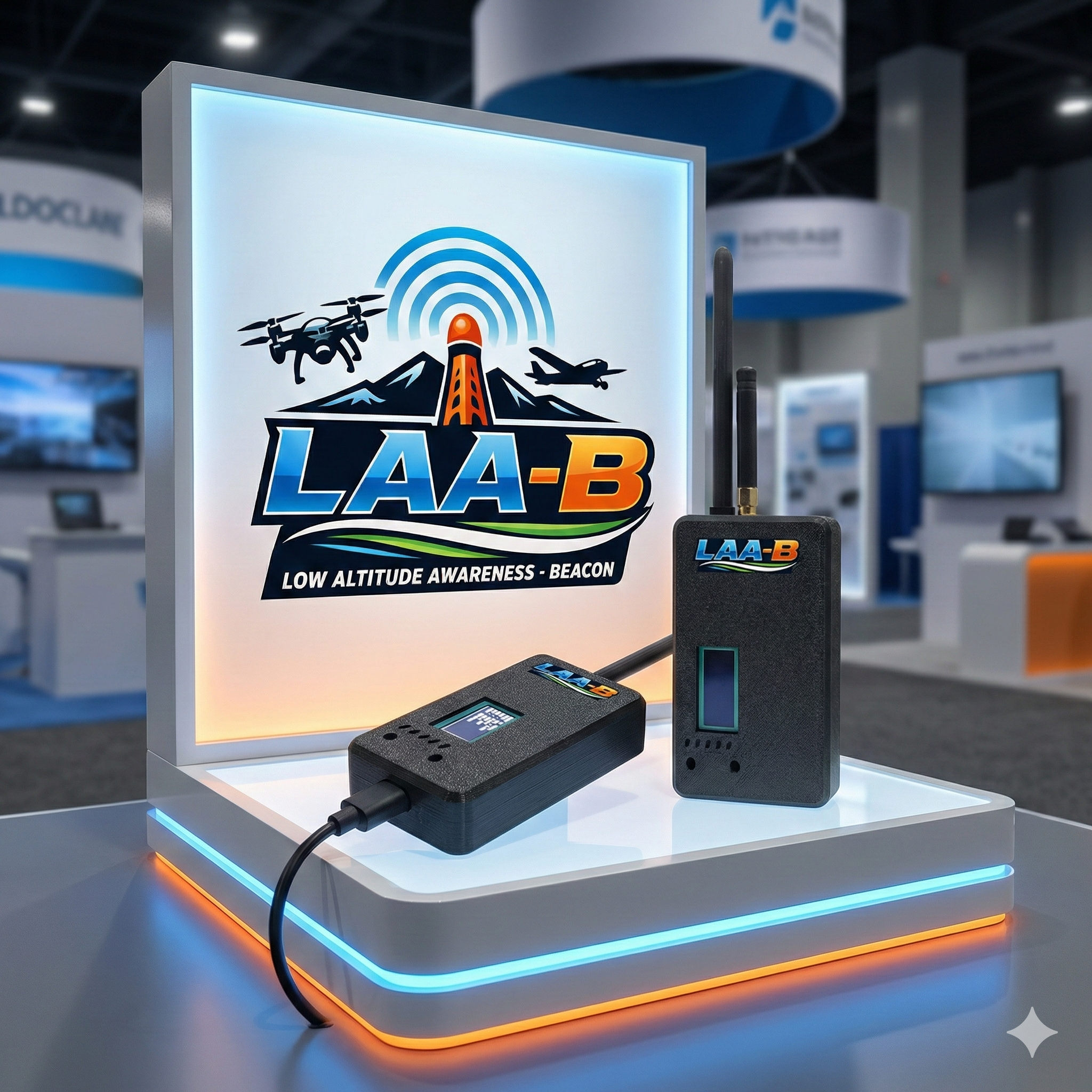
This project started with a simple operational question: why were aircraft appearing near UAS operations that ADS-B never showed?
During many UAS operations, especially in drone lightshow environments, commercial ADS-B monitoring tools were routinely relied upon to maintain situational awareness around the operating area. What became increasingly clear, however, was how often aircraft would appear visually or audibly with no corresponding ADS-B broadcast.
That observation pushed a deeper look into ADS-B itself — a system that, while familiar on the surface, does not directly serve small UAS operations. In doing so, a significant gap emerged in the broader understanding of where ADS-B is required and where it is not.
In many environments — particularly Class G airspace and lower altitudes — ADS-B equipage is not mandatory. Ironically, those same environments are where the risk of close encounters between UAS and general aviation aircraft is most likely to occur.
LAA-B is an attempt to explore whether a low-cost, peer-to-peer situational awareness system could provide some of the cooperative benefits of ADS-B — without attempting to replace it, interfere with it, or encroach on an already congested and heavily regulated surveillance system.
This is an early functional prototype and an active learning effort, not a finished product. The goal is to better understand how voluntary, cooperative awareness might improve safety at low altitude. In addition to the RX/TX beacons, the RX node allows up to two devices to connect via WiFi for a full live visual reference of cooperative movement in the area, including AGL, heading, speed, ID, proximity, and intent.
Thoughtful discussion from operators, engineers, and regulators is welcomed as the course forward for this project continues to take shape.